

Alex Sumner Needs You!
Yes, you. There are hundreds of you that have a copy of my book Taromancer
In order to take part, all you have to do is click on the link below and answer a few simple questions.
Thanks!
Alex Sumner Needs You!
Yes, you. There are hundreds of you that have a copy of my book Taromancer
In order to take part, all you have to do is click on the link below and answer a few simple questions.
Thanks!
Filed under Books, Taromancer
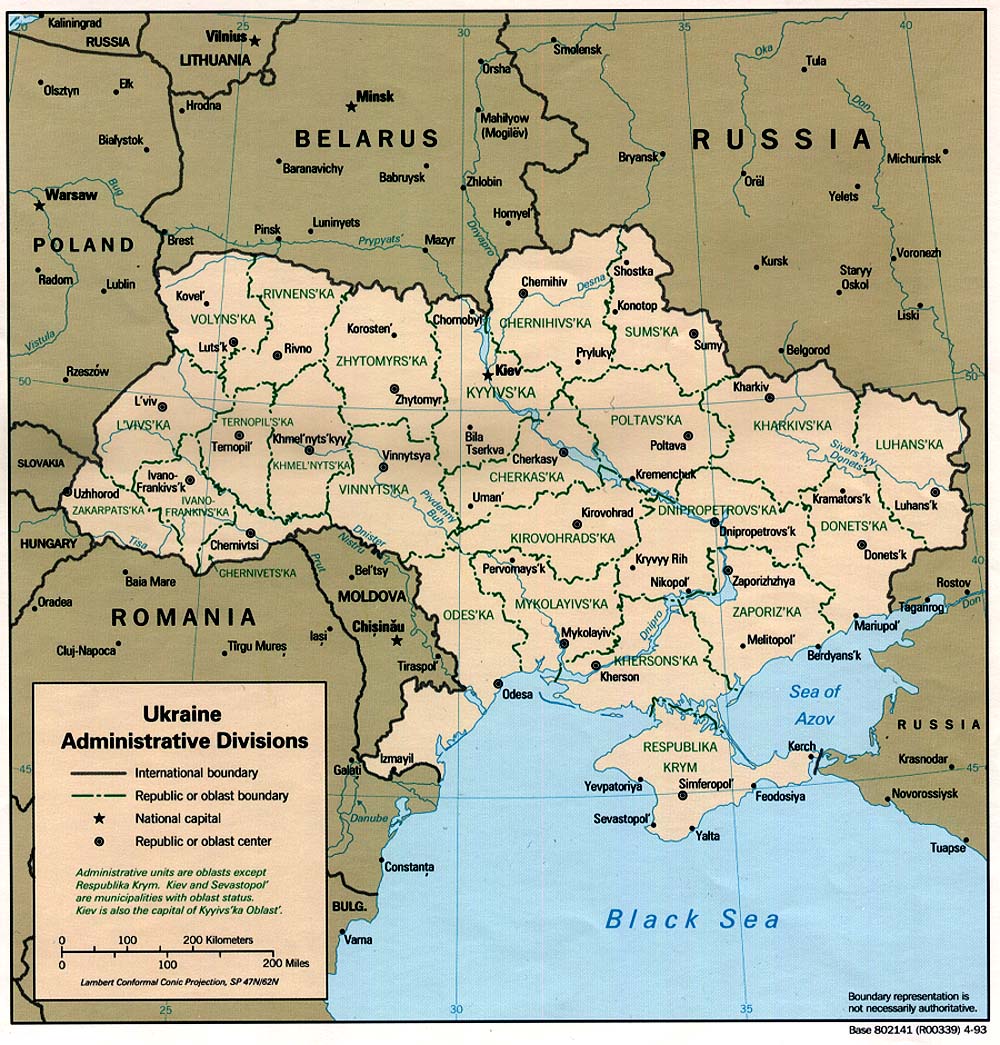
Ukraine

Banishing pentagram. Start from the lower left point and continue around, finishing where you started.
Filed under Comment, Supernatural
Shock! Horror! Sordid revelations! These are just some of the tabloid-style headlines which have nothing to do with my “Interview” at Smashwords.com. Instead, you will get fascinating information about my background, influences, my thoughts on the writing profession, and the real story behind my latest book Taromancer
Smashwords is the website if you want one of my ebooks in a format other than Amazon Kindle. Taromancer will be available therefrom from March 11th 2014 onwards.
For more information, see:
This blog post was inspired by a question on Facebook. My answer is a bit more involved than can be conveniently put in a FB comment, so I will post it here.
Celina, in a question in group “Golden Dawn Universum,” asked:
My practice is coming along but I would like some feedback on the intonation of the words. I’m inhaling good n I can do the vibration fairly good to. But it is mostly when I’m using my more quiet voice. When I’m home alone I like to do it louder. Sometimes my voice cracks a bit n its not a smooth chant. What is a technique for a good deep exaltation to make it more smooth and chanty? Where should u focus ur breath on when chanting ?
Now, everyone who’s into the GD style of magick comes up against a similar situation in their own practice, to wit: “How do I know when I’m doing vibration correctly?” I.e. the correct way of chanting or pronouncing Divine (etc) names.
The basic theory of “vibration” is that when you do it correctly, the vibrations actually affect the astral plane.
However – partly as a result of my own experiences and partly as a result of talking to magicians from outside the GD tradition – I’m beginning to wonder whether “vibration” per se is actually necessary at all.
My first reason to doubt the necessity of vibration came when I first practised Enochian. I recited an Enochian call, and immediately felt its power. All I had done was (a) memorise the call in Enochian; (b) memorise its literal English meaning; and (c) speak it normally in Enochian, whilst simultaneously remembering both its meaning and the magical effect it was supposed to have. There was no vibration involved whatsoever – and yet it still worked.
The second reason to doubt the necessity of vibration was a comment passed by an elderly gentleman who said that it is only necessary for ritual to be spoken and performed with dignity. The reason being that “them upstairs” can sense the intentions of the ritualist and don’t actually need co-ercing in the form of physical, mental or psychic exertions on the human’s part. Hence, instead of bursting a blood-vessel trying to vibrate (e.g.) “Yod Heh Vav Heh,” it is merely necessary to pronounce “Yod Heh Vav Heh” in the firm belief and confidence that YHVH will indeed hear it.
This is a rather radical notion – that angels and gods or God are in fact real, and exist independently of the paltry human’s attempts to mess about with the astral plane – but it does have the advantage of coinciding with the Right Hand Path’s notions of Grace, rather than the Left Hand Path’s more antinomian leanings.
Filed under Supernatural
Further to what I wrote about in the post New Beginnings I have spoken to my contacts in the Illuminati and I can confirm that I will be appearing at Salford Masonic Hall (click on the link for directions from Google maps) on Saturday 1st March 2014 (next weekend) – where I shall be presenting a talk and making myself available to answer questions thereafter. There will actually be several speakers that day – all taking part in a day of talks devoted to Tarot and Divination.
The fun starts at 10am! 🙂
Filed under Taromancer
Check out this great and data rich article on indie author earnings. Eye opening!
http://jakonrath.blogspot.co.uk/2014/02/me-hugh-howey-and-legacy-john-on.html
This is my review of Aaron Leitch‘s latest book on Amazon, to which I have given five stars.

The Essential Enochian Grimoire, by Aaron Leitch
The overall impression I got of this book is that it is aimed at those who are already sold on the idea of Enochian Magic in principal, and would like to learn more about its background.
Generally the quality of Aaron Leitch’s writing is high, however: one should observe a serious caveat when reading this book. This is not a *complete* text – but rather the first or introductory part of an ongoing series on Enochian Magic. So for example there is a description of “Gebofal,” a sophisticated Enochian self-initiation rite which takes place over 49 days, involving the Enochian Keys and the leaves of Liber Loagaeth. Whilst there is a full description of the daily rite, the key component – the leaves of Loageaeth – are missing from this book. Aaron tells us that he will be publishing his own version of Liber Loagaeth separately, in due course.
The majority of the book describes “Dee-purist Enochiana.” So called “Neo-Enochiana” is limited in discussion to the practices of The Golden Dawn


The Enochian work of the Aurum Solis and the Chaos Magick movement are not mentioned at all – although this constitutes no great loss.
Filed under Supernatural
Saturday March 1st 2014 is an auspicious date, astrologically speaking. The previous day, Mercury will have turned direct again after its most recent retrograde period. Whilst in the early hours of Saturday morning (GMT) is the precise moment of the New Moon.

Saturday 1st March 2014, the day of the New Moon and Mercury turning direct.
What better day than to start some new adventure? Indeed, and I myself shall be marking the day by hitting the road to promote the print edition of my latest* book Taromancer. On that Saturday I shall commence my nation-wide tour of the United Kingdom with a book-signing / tarot-reading session in Manchester. The print edition is available from Amazon, although I will be bringing along a limited number of copies myself.
Please get in touch if you are interested in coming along and I will keep you informed as to the precise time and place!
* When I say “latest” I mean I came out with it on Kindle as long ago as December 2013. Yes! Believe it or not I am still on the promotional trail of the last book, unlike some writers I could mention! 😉
Filed under Books, Taromancer

Happy Valentine’s Day! ❤
You have the power to call upon the abundance of the Universe to manifest your needs and desires. But what, you may well ask, in a world where you may have potentially infinite wants, should you attempt to manifest first and most importantly above all?
I suggest that by far the most important priority is LOVE, i.e. finding and falling in love with your soul-mate – for the following reasons:
Firstly: the Romantic Reason – because finding true love is an end in itself.
Secondly, if the first reason were not good enough, there is a slightly crafty reason – because once you find true love, this will inspire you to Manifest all your other wants as well!
This is not just a case of the resulting boost in self-esteem causing happiness in all areas in your life generally. In his book Think and Grow Rich
Hill’s book, unfortunately, is of its era (the 1930s) in that he did not include successful women in the list of people which he analysed, although to be fair this probably says more about the Era than it does about Hill. However, assuming that the female sex-drive is at least as high as that of men, then there is no reason why the basic principle should not apply equally to both sexes.
So there you have it! A Happy Valentine’s Day to you all, and may all your wishes – Romantic and otherwise – come true. 🙂
Filed under Supernatural




 Sol Ascendans - The Website of Alex Sumner
Fred Phelps: the Initiated view
The Admiral knows best
News of Fred Phelps imminent passing has produced a strangely consistent reaction in the world outside the Westboro Baptist Church. Much of it is seriously unwise – for the following reason:
Dead men serve no libel writs.But dying men can.
And what’s more, if he begins a libel action before he dies, his estate can carry it on afterwards.
That’s right: everyone who has thought fit to crow about this man’s predicament before he’s actually gone has potentially opened themselves up to a law suit. And this includes every website which has allowed libellous comments on articles reporting the situation.
So be sensible. Don’t give Fred Phelps the last laugh. Keep shtum.
Leave a comment
Filed under Comment
Tagged as Admiral Ackbar, defamation, Fred Phelps, God Hates Fags, It's A Trap, libel, Return of the Jedi, Westboro Baptist Church