
Why? What have I done this time?
This is a response to Peregrin Wildoak’s blog post, What the (magical) world needs right now.
With all due respect to Peregrin, the idea that Shame is enough to solve the perceived evils of the Mind Body Wallet phenomenon is far too simplistic. IMO, the roots of the problem lie in deeply held cultural differences between practitioners of magic. To wit:
- In cultures within the sphere of influence of traditional Christian morality – even if not everyone within that culture is Christian per se – anything that deviates from a conventional notion of Authentic Spirituality is likely to be labelled Charlatanism.
- However, in cultures outside that sphere of influence, Charlatanism is Authentic Spirituality.
To illustrate my point, let me relate the story of a talk I recently went to, in which the speaker described how he went to Peru to learn the ways of Ayahuasca. One of the key points he mentioned is that the Ayahuasceros – the ones who know the true way to partake of the Vine of Death in a proper ceremonial context – are all, to a man, complete and utter scoundrels. “That is why I resolved to cut off all ties from my spiritual teacher at the earliest opportunity,” the speaker said.
The magicians in these parts of the world make no bones about charging money for their services. It is common for them if, someone comes to them asking for help, to use the old line: “Ah, a rival Brujo has placed you under a curse! Fortunately if you pay me enough money I will start a magical war with this sorcerer.” Then, when the client gets worse, he or she goes to the next magician who in his turn says that the previous magician, far from helping, himself put a curse on them – and for the usual fee, etc etc.
Moreover, such magicians view apprentices with suspicion. Far from being motivated by a sense of passing on a noble tradition, they recognise that any apprentice they train up is likely to become a business rival. Hence, whilst they may be willing to initiate an apprentice (for the right fee), they will quite happily try to keep them in a subservient position, or steal their power from them, lest they ever look like becoming as skillful a magician as they.
Most importantly though, they periodically curse the local inhabitants and make sure they know about it – so that they regularly propitiate him. And you know what? The locals just lap it up. Because they have no conception of someone like Jesus who healed people out of the goodness of His heart, or magicians who take it as a point of principle to give their services for free, the idea that a real magician should be anything other than an unmitigated rogue is completely alien to them.
There is a saying: “If you meet Buddha on the road, kill him.” Fluffy bunnies like to misquote this as “If you meet Buddha on the road and he gets in the way, kill him.” Many people say it means “kill him in your mind” but, given the reputation of spiritual teachers in South America, Africa, Asia, etc I say it means to literally kill him – because he is most likely to be an evil so-and-so who is up to no good.
Now let us look at Western consumerism. For a start it should not be called Western Consumerism at all, but just “Consumerism,” because it is the same in principle the world over. The only difference between a Brujo in the South American jungle and a New Age practitioner in the developed world is the technology to which they have access: however if you were to ask either of them whether it is right to charge money for what they do, they would both reply identically.

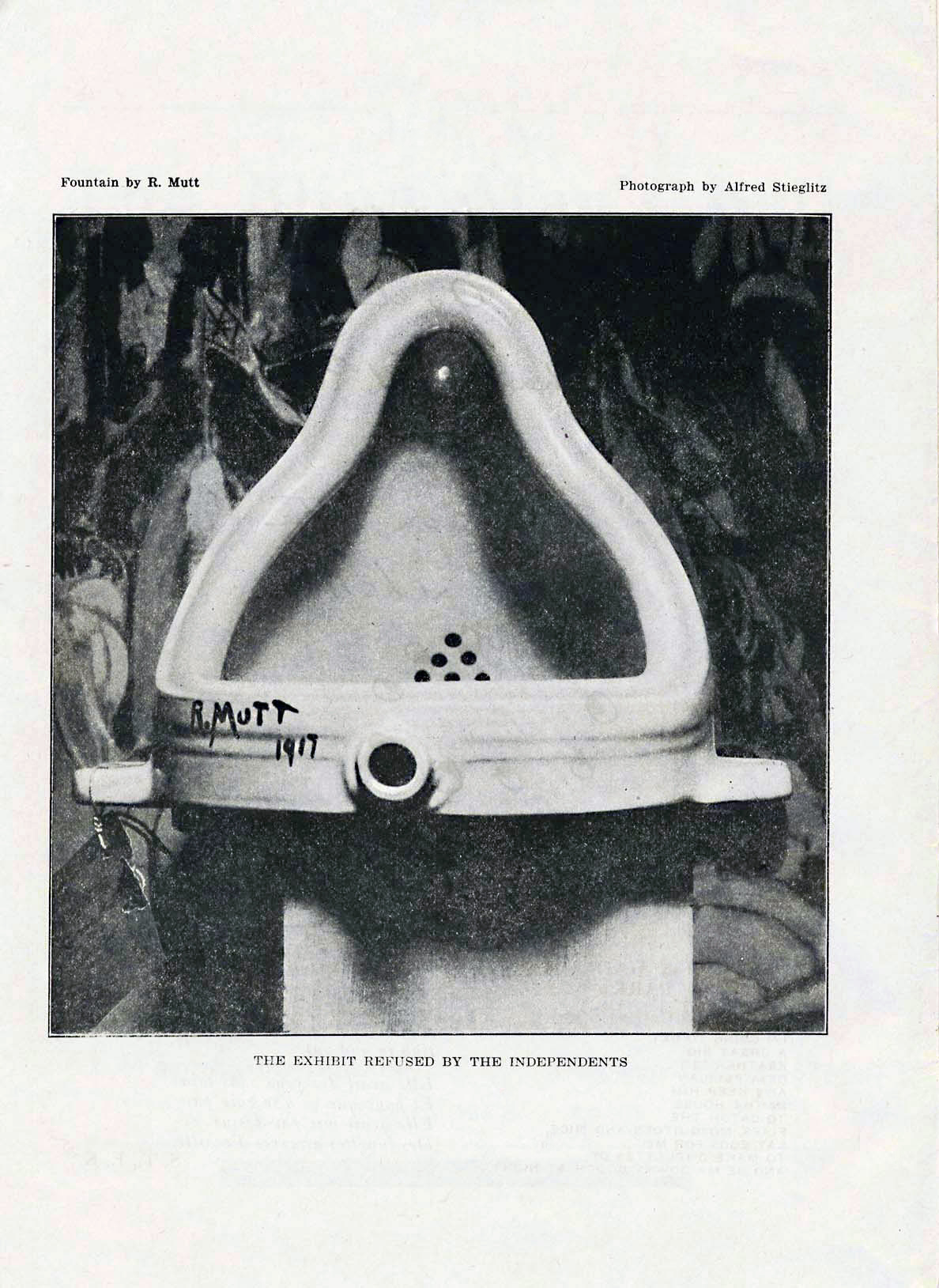
Marcel Duchamp invented the concept of Decommodification in 1917 when he announced: “This is a work of art, not a commode!” 😛
As far as I’m aware, the idea of true spirituality being free was established in Europe because of the influence of Christian morality generally. It has its roots in Rosicrucianism – i.e. that none of them should profess anything except to heal the sick and that gratis – and was enunciated in the late Victorian occult revival by magicians under the influence of Christianity, even if they chose not to practice it conventionally or at all – not just the Golden Dawn, but on the other side of the English Channel, by the Martinists as well. It strikes me that by Decommodifying spirituality, they anticipated the Conceptual Art movement of the twentieth century! Moreover – by making initiation free, it removes the threat of an initiator trying to exploit and cheat his initiates – and of the latter wanting to set up in competition with the former once they have served their apprenticeship. However, once a magician moves outside the hegemony of the Christian / Rosicrucian paradigm, there is no reason to suppose that they will adhere to the moral framework thereof, nor that shame will drive them back to it.


 .” 😛 I actually have a niggling problem with Dracula though: it is this –
 is there any explanation as to why he would want to give all of this up, and move to Whitby – of all places!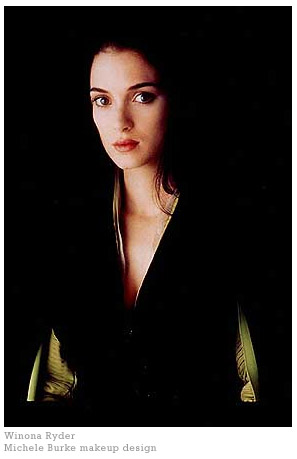
 sensed this fundamental flaw in the novel which is why he invented a back-story for Dracula for his film, namely that the Count was searching for his lost love. Given that she was played by Winona Ryder, he could have just done this by staying in Transylvania and following police-reports and in-store CCTV footage!







 Sol Ascendans - The Website of Alex Sumner
XX Bishops
Two years ago the Catholic Church ruled out the Ordination of Women as Priests: now the Church of England has ruled out the female bishops. Now the thing is that Bishops are traditionally the successors of the Apostles: hence if it had been the case there were female Apostles, then it is theologically correct to have female Bishops.
In a blog post I wrote two years ago, I advanced an argument to say there is scriptural evidence that there were indeed female Apostles! Note that this is nothing to do with revisionism, but the correct reading of the original scriptures.
I do hope, however, that the Church of England can sort this out in-house. There is a distressing number of people saying that Parliament should now overrule the General Synod. I hope this does not happen. As I understand the term, Freedom of Religion is supposed to mean Freedom from Government interference in Religion. If this is meant to be a human right – as the UN Declaration on Human Rights, the European Convention on Human Rights, etc would suggest – then it ought not to be qualified by adding “… but only when you don’t do anything the Government disapproves,” otherwise it is not a real right at all.
1 Comment
Filed under Comment, Religion
Tagged as Anglican, church of england, Female Bishops, Freedom of Religion, John Welby, Rowan Williams, Synod