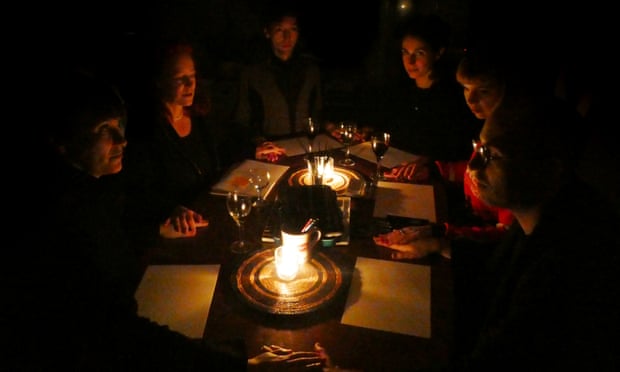
Tantra, spirit mediums, Obeah – why have things become ‘a bit witchy’ in the art world of late? Our writer takes a trip into deep space to find out
The occult’s return to art: ‘Before, you’d have been laughed out of the gallery’ | Art and design | The Guardian
Filed under Comment
Alex Sumner’s answer to As a beginner in tarot reading, is it normal to be confused at the results and even feel like the answers don’t make sense? – Quora
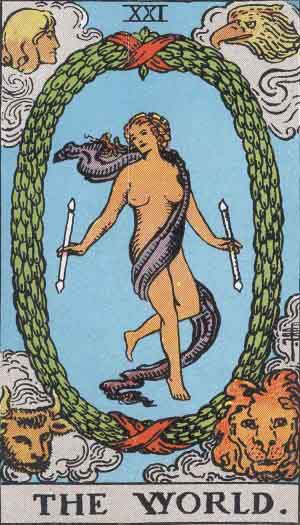
(a2a) Yes: you are not alone, I myself and I guess every tarot reader has been where you are when they began. There is no shame in feeling that way. As to what to do about it, I would give the following advice based on my own experience.
- Treat Tarot Reading like an Art. A concert pianist does not worry about how much money he will make playing the piano, he concentrates on playing the best he possibly can – i.e. perfecting his Art. Conversely, if he did think about where his money his coming from, that would distract him from the pure art of playing. Similarly, if you really want to get good at Tarot reading, be like the Artist aiming to be the best Tarot reader you can possibly be – don’t go into tarot reading thinking about trying to please others or making money from fortune-telling.
- Learn to get rid of the Little White Book as soon as possible. The LWB does not and cannot provide for every eventuality, so you should aim to get to a point where you don’t have to rely on it at all. This is another way of saying – learn to memorise the meanings of the individual cards – however! This does not have to be more difficult than need be. For example, picking one or two keywords for each card. I also found it helped to imagine that the Minors in the form of a grid of 4 columns (suits) and 14 rows (Ace to 10 and the Court Cards), realising that all columns have a similar meaning; all rows have a similar meaning; therefore a rough & ready way to remember a Minor is to mentally cross reference the two.
I also found it helpful to compare each tarot card with its astrological associations, and to analyse and look for patterns.
- Read widely. Especially the thoughts of other practicing tarot readers. Not just books, but blogs as well. There is always the possibility that someone with more experience has come up with an insight which helps you.
- Practice, practice, practice. The Three Ps. You can and should practice on yourself to begin with, but eventually you can take the plunge and try to give readings for other people – I found doing so myself boosted my confidence.
But really the most important piece of advice I would have to offer is
- EMBRACE THE CONFUSION. It’s actually the challenge of trying to figure out the meaning of a difficult or seemingly out-of-place card which makes you a better tarot reader. It’s that flying-by-the-seat-of-your-pants feeling which makes you realise the real secret of Tarot reading, which is that it’s not really about the cards, but about your own intuition. Ideally therefore, you shouldn’t be afraid of Confusion – you shouldn’t even resign yourself to accept it grudgingly – you should embrace it as an opportunity to grow and develop.
Filed under Supernatural
Alex Sumner’s answer to Hi! When I was about 16 yrs old, I was napping and was slightly woken up by this bright figure. Could this have been an angel or something? Also, I don’t see spirits anymore like I used but oftentimes I see glimmering orbs. What would this mean? – Quora

Hi! When I was about 16 yrs old, I was napping and was slightly woken up by this bright figure. Could this have been an angel or something?
I once had a vision in which I saw an Angel. At the same time as I saw it, I felt a tremendous ecstatic feeling which I can only describe as like the way in which books on yoga philosophy describe spiritual enlightenment (samadhi). From that point on, I became convinced that they way to tell whether a being is an authentic angel or not is whether its presence causes samadhi. With maturing years, I have come to believe that in a certain sense, the samadhi is the Angel.
So to answer your question directly – was what you saw an Angel? Well, think carefully about how you felt at the exact time it happened. Did you feel excited, exhilarated, surprised, astounded, or anything else that could be described as noumenal? Or did it just pass you by like something fairly unremarkable? Ultimately you will know yourself whether your experience was genuine.
Also, I don’t see spirits anymore like I used but oftentimes I see glimmering orbs. What would this mean?
If you can see them floating in the actual air in front of you, they might be manifestations of some kind of spirit. There are different kinds of spirit that could appear in such a way, for example it could be an elemental or nature spirit. I tend not to believe that the spirits of dead people appear in this way, as if they made a successful transition to the other side, they would not be hanging around the physical plane in this manner. The exception to this was if there were something wrong, in which case it could indicate that the spirit needed help in making a successful transition.
If, however, the orb just appears as a spot on a photograph, I would strongly advise against reading too much into it – apart from a peculiarity in the way that the camera has captured light reflecting off a dust particle.
Filed under Supernatural
Review: “Meditations for Every Week,” by Paul Sédir
“Meditations for Every Week,” by Paul Sédir.
At first reading, this appears to be a book of fifty-two meditations which follow a fairly conventional path of Christian devotion. On closer inspection, one notes some curious departures from orthodox Christianity. Why, for example, does the author talk about having past incarnations (Chapter LI, “Insubordination”)? Why does he attach so much importance to St John the Baptist (Chapter V, “The Precursor”)? Why, even do we get this curious comment:
“Esotericism studies, among other problems, the means of producing natural miracles. … We will only have the legitimate right to command Nature when she sees that we are masters of ourselves, when we have followed the school of the Gospel to the end… Before any action, ask the Father for His consent.”
Chapter XXIX, “The Miracles of Jesus.”
Thankfully, one can readily discern the answer in the biographical note, helpfully provided by the translator. Paul Sédir (born Yvon Leloup, 1871) as a young man in his late teens / early twenties became an enthusiastic member of just about every occult society going in Paris in the fin-de-siècle period, falling in with the likes of Papus, Jules Doinel, etc. As such he would have been familiar with Martinism, Gnosticism, the Order Kabbalistique de la Rose Croix and various shades of Rosicrucianism, Egyptian Rite Masonry, etc, etc etc. However in 1897 he met Maitre Phillipe of Lyon, who appears to have had a sobering effect on young Sédir, as he resigned from every order of which he was a member, and devoted the rest of his life to Christian mysticism.
As an aside: Sédir would have been coming up to his first Saturn return when he took the decision to step back from the esoteric societies of which he had been a member, and as such he would naturally felt a desire to re-evaluate his life as he said goodbye to the follies of youth and entered adulthood-proper. Coincidentally, Maitre Phillipe seems to have had a similar effect on Papus himself when the latter first met him: Papus had taken umbrage at Phillipe for some reason, and was about to work some supposedly fearsome black magic on him, when the Maitre “pulled a Plotinus” on him, causing him to drop his magic sword – both literally and metaphorically. Assuming that Maitre Phillipe’s effect on him was similar to that on Sédir, it says a lot about Papus that Martinism was to his former sorcery what Christian Mysticism was to Sédir’s Martinism!
Anywho, the present book – “Meditations for Every Week” – may be summed up as mostly Christian in character, but displaying the vestiges of memories of esotericism – which sums up Sédir’s life-path. From the rather obvious pentacle on the front cover, it appears that the translator intends the book to be most useful to students of Martinism, even though Sédir had resigned from office in Papus’ order. Or in other words: “You can take the man out of Martinism, but you can’t take Martinism out of the man.”
“Meditations for Every Week,” by Paul Sédir. ISBN-13 9798643208631. Available from Amazon.
Filed under Uncategorized
Alex Sumner’s answer to Is tarot reading magic? – Quora
(a2a) It can be magical, and in the tradition which I practice, it is magical. By “magic” I am here referring to what is sometimes referred to as “magick” or the art and science of causing in change in conformity with Will, or in other words, the occult.
Tarot is magical at many different levels. For example: the actual act of interpreting the symbols of the cards stimulates the intuition of the reader, in which case Tarot becomes a key to unlocking the reader’s psychic powers. More generally there is at least one tradition of ceremonial magic which integrates tarot reading into the actual magical ceremony, so that one realises that the same techniques of clairvoyance and magical invocation for use in an occult ritual generally can unlock the full potential of tarot as a divinatory tool specifically.
Ultimately, because having a Tarot reading can be viewed as a quest to go out of the Darkness of ignorance into the Light of knowledge, one can draw parallels between it and the quest for spiritual illumination which is at the heart of true occultism.
Source: Alex Sumner’s answer to Is tarot reading magic? – Quora
Filed under Supernatural
Alex Sumner’s answer to Who are the secret chiefs of the Masons? – Quora
The Theosophist, Charles Leadbeater, alleged that the Secret Chief or “the Head of all true Freemasons” is Francis Bacon, 1st Viscount St Alban. (Note the use of the present tense despite the fact that Bacon is popularly believed to have died in 1626).
Some Memphis-Misraim rites believe that the Secret Chief of Freemasonry is a character named “Elias Artista,” whom Paracelsus first described as a sort of mythical patron saint of Alchemy. There are probably people who believe that Francis Bacon and Elias Artista are the same person.
Of course, whether you chose to believe this is another matter. Most Worshipful Brother Bacon has requested his name not be disclosed, so all true Freemasons will deny the existence of a Secret Chief of Freemasonry – as witness the other answers to this question.
Source: Alex Sumner’s answer to Who are the secret chiefs of the Masons? – Quora
Filed under Comment
Alex Sumner’s answer to What tarot card is number 11? – Quora
(A2A) The answer to this has changed over the course of history.
In every Tarot deck inspired by the Hermetic Order of the Golden Dawn – including, most importantly, the Rider Waite Deck – Tarot Key 11 is “Justice.” However in every other deck, including every deck devised before the Golden Dawn, Tarot Key 11 is “Strength.”
Confusingly, the Crowley Thoth deck, which undoubtedly is GD-inspired in part, has its equivalent of “Strength,” i.e. “Lust” as number 11, and the counterpart of “Justice,” i.e. “Adjustment” as Key 8. This is not, as some believe, because Crowley was using his ipsissimus super-powers to change the order of these two trumps, he was simply keeping the numbering found in ancient tarot decks.
VIII Adjustment, in the Crowley Thoth Deck. Numbered 8, but nevertheless attributed to Lamed and Libra all the same.
The reason there is any confusion at all is that the GD came up with the idea that if Keys 8 and 11 were Strength and Justice respectively, they would correspond to Leo and Libra, and if you put the Fool at the head of the Tarot Trumps, the whole sequence would qabalistically map onto the 22 letters of the Hebrew alphabet. Hence the innovation was made by the GD in making Justice number 11: Crowley just changed the numbering back – although he did retain the astrological signification.
Source: Alex Sumner’s answer to What tarot card is number 11? – Quora
Filed under Supernatural
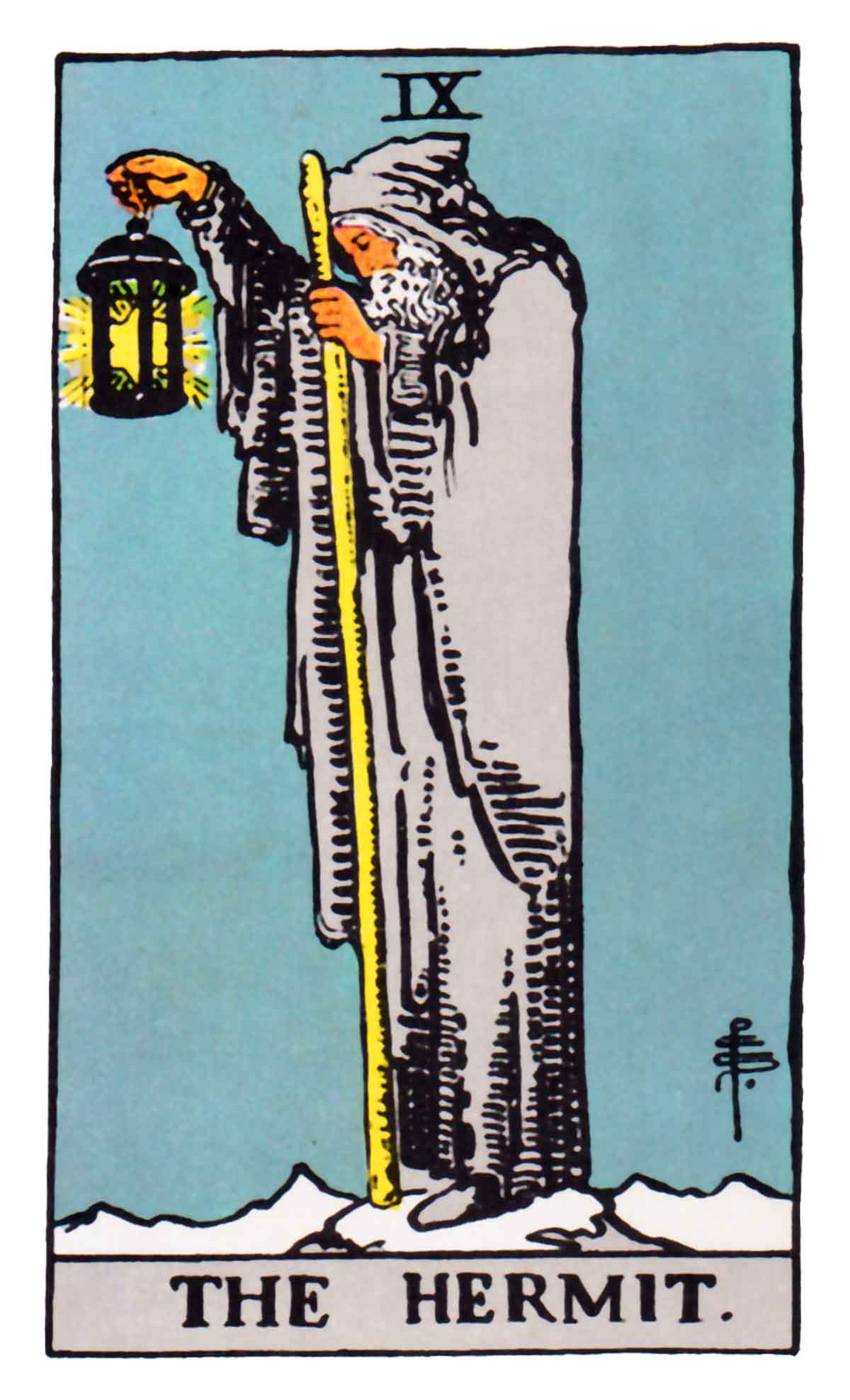
The Hermit’s Lamp: The Continuing Tradition of the Modern Hermetic Order of the Golden Dawn
A blog post written by Aaron Leitch – via The Hermit’s Lamp: The Continuing Tradition of the Modern Hermetic Order of the Golden Dawn
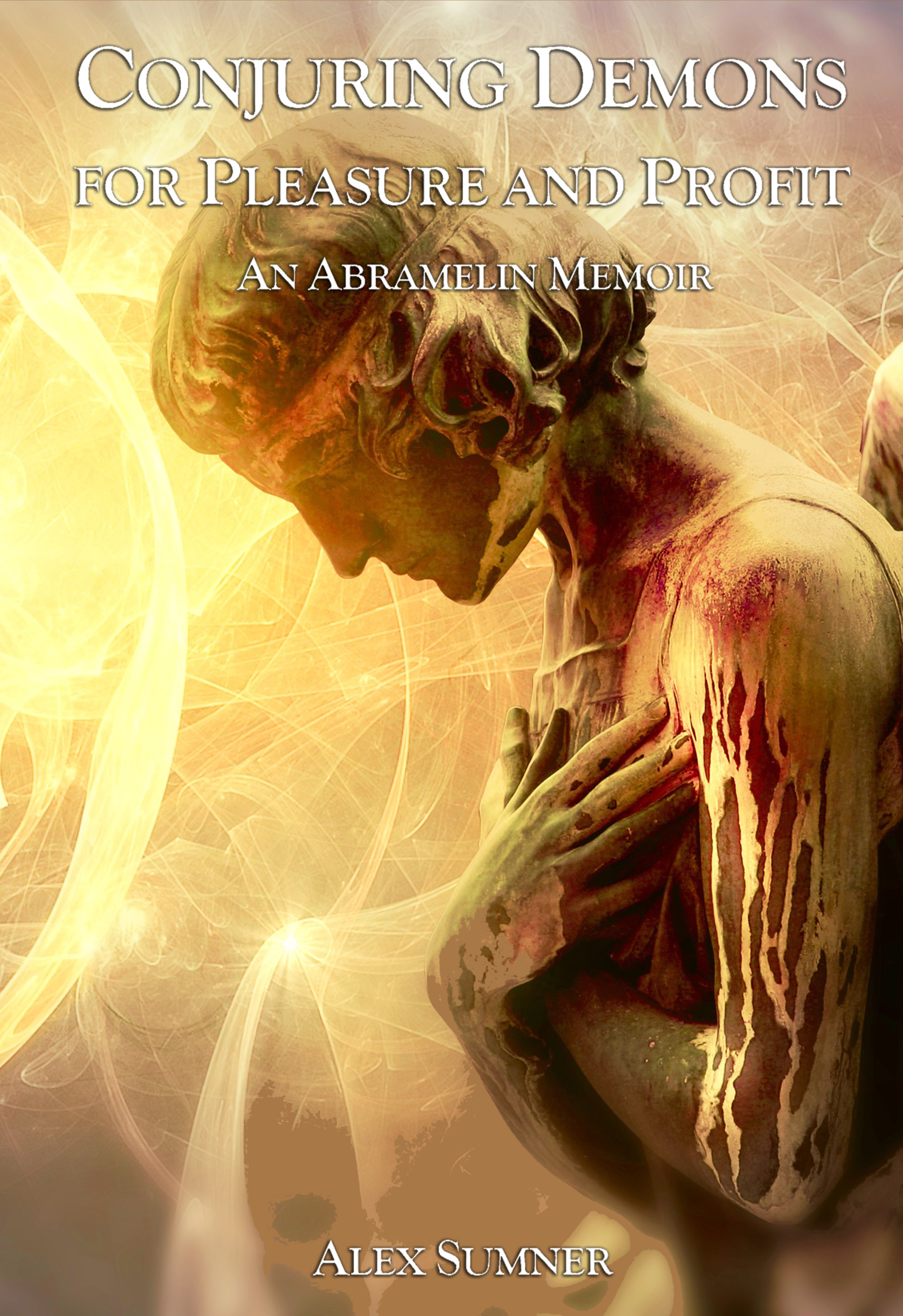
Mathers’ Abramelin Manuscript
As much for my own benefit as anyone else’s reading this site…

S L MacGregor Mathers
The Manuscript which Mathers famously found at the Bibliothèque de l’Arsenal and translated into English as The Book of the Sacred Magic of Abramelin the Mage, and which was for almost a hundred years thought to be the only manuscript extant – which gave birth to the much over-used and abused phrase “Knowledge and Conversation of the Holy Guardian Angel” – is available online. It has been scanned and made digitally available here:
Despite the shortcomings of the manuscript – yes the word squares really do have big gaps in them – the handwriting is actually the best quality of all the Abramelin Mss I’ve seen so far – i.e. a lot nicer than the crabbed scrawl of the Dresden and Leipzig versions.

First page of book three of the Mathers Abramelin manuscript
If you have enjoyed reading this article, please consider making a donation to my Just Giving page – raising money for poor and vulnerable families affected by the Covid 19 lockdown. All thanks to God and my HGA for being able to participate in the Sacred Magic.
Filed under Supernatural


‘Satanist’ fears over development of former occultist’s Scots home grow despite ‘secular’ promises – Daily Record
Shock! Horror! The Boleskine House Foundation has the temerity to want to be on good terms with Thelemites! The outrage!
It’s a slow afternoon, and this story appeared in my Google News feed. You can take the measure of the standard of journalism on offer by the following quote:
(They say this like it’s a bad thing?)
In an article uncovered by the Record, the foundation who manage the Loch Ness property say they plan to uphold the occult legacy of the house.
Source: ‘Satanist’ fears over development of former occultist’s Scots home grow despite ‘secular’ promises – Daily Record
Leave a comment
Filed under Comment
Tagged as Abramelin, Aleister Crowley, Boleskine, Jimmy Page, Thelema, Yellow Journalism