
Reblogged from Patheos.com – nice to see Macgregor Mathers, Dion Fortune, Eliphas Levi mentioned!
25 Most Influential People in the Birth of Modern Paganism (European Wing).
Reblogged from Patheos.com – nice to see Macgregor Mathers, Dion Fortune, Eliphas Levi mentioned!
25 Most Influential People in the Birth of Modern Paganism (European Wing).
Filed under Supernatural

Quiz: spot the Crook in this picture.
Fate can be a cruel altar boy sometimes. Not only has it seen fit to depose Pope Benedict XVI, it has now got rid of Cardinal Keith O’Brien, Archbishop of St Andrews & Edinburgh. Unfortunately, given the circumstances of his departure, he only had twenty more days before retirement anyway, so in terms of damage to the Catholic Church the point is almost academic.
Nevertheless: when looking for the stars of the day, I cannot help but notice that the same planet that figured so highly in the chart for the Pope’s departure is also prominent in that of the Cardinal’s, viz. Uranus. However, whereas in the Pope’s case I am willing to believe that His Holiness’ departure is genuinely due to the decrepitude of old age (because he is currently undergoing a Uranus-return), O’Brien’s recession is far more intriguing.
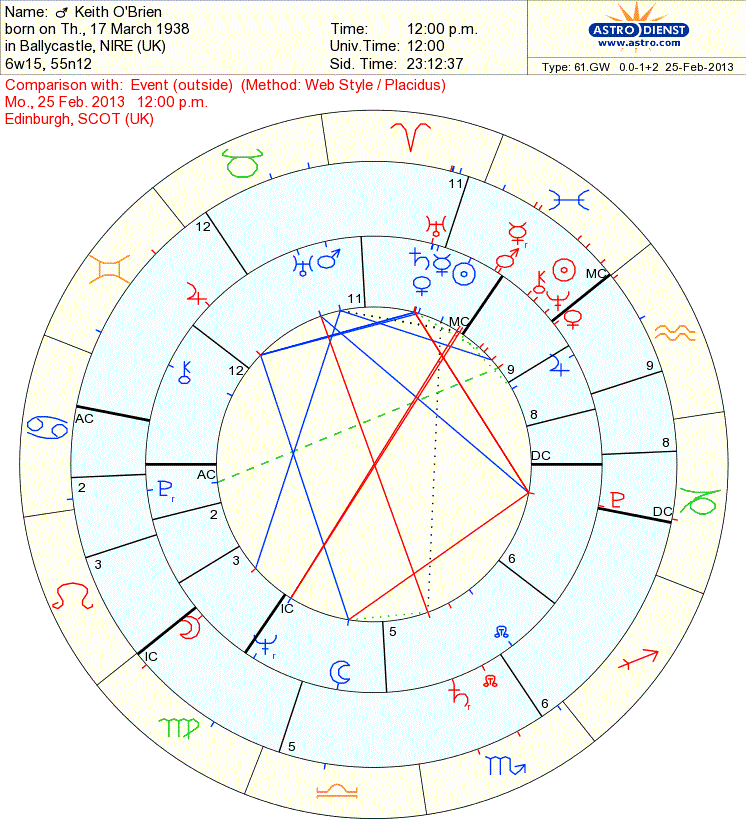
Outer ring: chart for O’Brien’s departure, 25th Feb 2013
Inner ring: O’Brien’s birth chart, 17th March 1938 (times approximated to 12 noon in both cases)
O’Brien (born 17th March 1938, Ballycastle, Northern Ireland), has Uranus, the planet of forced resignation, transitting Venus, the planet of inappropriate touching, Saturn, the planet of bringing things like one’s career to an end, and Mercury, the planet of public scandal. Of these three, Saturn is the slowest moving one, indicating what we already knew, that the end of O’Brien’s career would happen in this general time-period, whilst Venus and Mercury indicate the particular nature of his departure.
Hence, Uranus has seen off two senior figures in the Catholic Church, though for different reasons. This has given the Sumner Family Brain Cell an idea.
There is a saying bandied about by some astrologers that the discovery of each of the new Planets had something to say about the age in which it was discovered. Uranus was discovered in 1781, leading some to associate it with the birth of USA (the American Revolutionary War ended that year), or of the Industrial Revolution, but more generally speaking it came at the end of the Age of Enlightenment – which from a philosophical point of view marked the beginning of the decline of the Christian Church. (NB: from a Postmodernist point of view, the decline in popularity of a thing is not a valid indicator of its worth). Hence I am tempted to speculate that this is the real meaning of the Age of Uranus – that of the decline of Christianity as an organised religion. We may therefore keep a track of this planet’s movements to see how much further it goes down the plughole of history in the future.
Filed under Comment, Religion, Supernatural

His Holiness Pope Benedict XVI
For someone who famously made remarks criticising Gay Marriage, I find it ironic that Pope Benedict XVI has been forced to resign by comedy planet Uranus. Yes indeed! For that is the interpretation I have come up with by comparing the Pope’s birth-chart with one drawn up for the announcement of his resignation yesterday.
Pope Benedict XVI was born Joseph Aloysius Ratzinger at 0830 on 16th April 1927 at Marktl in Germany. Interestingly he had both Mars and Caput Draconis on his Ascendant, indicating that he was destined to come across as a pugnacious individual. Also, Mars was square to his Mercury, Jupiter and Natal Uranus, showing that his aggressive persona would hold back his ability to express himself clearly, get in the way of his ability to lead as Pope (in mundane astrology Jupiter represents the clergy), and make him react combatively if anything revolutionary came along.

Inner ring: Pope Benedict XVI’s natal chart.
Outer ring: the timing of his resignation statement.
Indeed, Uranus was transitting his Mid-heaven when he first became Pope in 2005! The planet though is a slow-moving one, indicating that the issue which has led to his resignation has been hanging over him for some time. Why has he announced it now? Probably because a whole load of other planets are transitting his mid-heaven, which would affect his relationship to his career and society at large.
This has given me an idea.
I, Alex Sumner, offer my services to the Conclave of the College of Cardinals due to take place on February 28th 2013 – as the in-house astrologer! I shall draw up charts for all the leading Papabile so that I can give everyone an informed opinion of who is likely to make a good Pope or not. This I am willing to do without payment per se, but I will need certain expenses to wit:
So there you have it. Obviously some things go without saying, like being allowed to sneak out of the Sistine Chapel to indulge my creature comforts using the secret passageway in the Vatican
Filed under Comment, Religion, Supernatural
How well do Occult orders actually teach their initiates? How well indeed do individual temples within those orders teach them? In order to formulate a general principle as to how students of the occult should be taught, I decided to delve into a realm far more esoteric than anything in the Western Mystery Tradition: namely, Educational Psychology. More specifically, I decided to compare what usually passes for occult training with a model which is used by teachers in high schools across the world, namely Bloom’s Taxonomy of Learning. The Taxonomy helps to classify just how a much a student has mastered any given subject which they are learning.
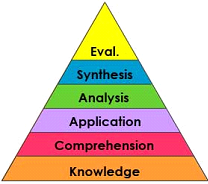
Bloom’s Taxonomy (original version)
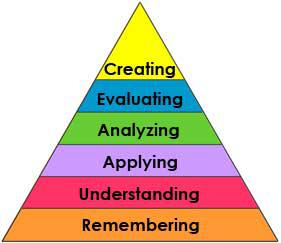
Bloom’s Taxonomy, as updated by Lorin Anderson. They are ranked in order of ascending difficulty
Benjamin Bloom (1913 – 1999), in 1956, led a group of educational psychologists who established six levels of intellectual behaviour important to learning. These levels were organised cognitive levels which ranged from simple recall of knowledge, to making judgements about the reliability and value of an idea. During the 1990’s Lorin Anderson (a former student of Bloom) headed a new group of cognitive psychologists and updated the taxonomy.
The six levels (i.e. of the updated taxonomy) may be summarised thus:
Remembering
Can the students recall or remember previously learnt information, for example facts, terms, and basic concepts from an educational text?
Understanding
Can the students demonstrate an understanding of the ideas or concepts stated in the text?
Applying
Can the students use the new information and apply it to actual situations?
Analysing
Can the students break down and distinguish between different parts and find evidence to support generalisations?
Evaluating
Can the students justify a stand or decision?
Creating
Can the students create a new product or point of view based on internal or external criteria?
A necessary implication of this is that a Teacher may well come up against *cough* *cough* I mean “come across” pupils whose maximum level of functioning is any one of these six. He or she may even have pupils at different levels within the same class! Therefore, in ideal circumstances the Teacher ought to have the acuity and the flexibility to, firstly, identify exactly at which the levels the pupils currently are and, secondly, adapt their approach as appropriate. Were all pupils in one class taught at exactly the same level in any given lesson, it is likely that pupils capable or only capable of operating at the other end of the scale would feel left out. And of course there is the danger that it the level were uniformly pitched for all in the middle of the scale, pupils at either end of the scale would feel left out.
Now let’s turn to how the mysteries are taught in occult orders, in the light of this taxonomy.
The most influential occult orders today were founded in the late 19th and early 20th centuries, i.e. before this taxonomy was codified. More worryingly however is that I have seen little evidence that they managed to incorporate these principles of their own volition, without reference to Bloom’s efforts. I have not actually seen much evidence that they have done so since, for that matter.
Take for example the Golden Dawn. If you shove a Knowledge Lecture under someone’s nose and tell them “memorise this,” you are only operating at the lowest cognitive level, that of Remembering. If then you base the exam for that grade on successful recall of facts of the knowledge lecture, e.g. by weighting the marking so that not many points are scored for showing anything other than Remembering, you will end up advancing people through the grades who show less independent thought than a fairly bright school pupil.

Did someone mention my name?
However, this is not a potential pit-fall of just one system. Take, by way of example, this quote from Crowley’s One Star In Sight regarding the tasks of the various grades of the A.’.A.’.
Neophyte. —Has to acquire perfect control of the Astral Plane.
(NB: a “Neophyte” here is a 1=10, which would be called a Zelator in the GD).
Now, what would the response be to a student who has the temerity to ask: “Hang on a sec – why ought a Neophyte to acquire perfect control of the astral plane?”
| Creating | It is not necessary at all. I have worked outside the strict Thelemic tradition and have had success nonetheless. Hence I am better than Crowley! |
| Evaluating | I have gathered independent evidence which tends to corroborate Crowley’s assertion that a Neophyte of the A.’.A.’. ought to acquire mastery of the astral plane. |
| Analysing | It is not necessary for a Neophyte to do so per se – for example they could have acquired such control whilst they were working as a Student or Probationer – but it is necessary for them to be able to control the Astral no later than that stage in their learning. |
| Applying | Because Neophytes come into situations at that particular stage of their magical development where perfect control of the astral plane is a necessity. |
| Understanding | Because Crowley thought that Astral projection etc was essential to learn immediately after acquiring a general knowledge of magic and before attempting to master asana and pranayama. |
| Remembering | Because Crowley said so, and if we don’t all do what he says then we are not singing from the same hymn sheet. |
| Below Remembering | How dare you question the Great Beast 666! Get out, and do not darken my washroom towels ever again! |
So you see, applying Bloom’s Taxonomy to the occult is not just to inform them of the subject but to encourage the pupil to become a free-thinker on the subject. This may be a bit of an extreme example, so allow me to envisage something a bit more down to earth. Say for example the task is to design and consecrate a Talisman, for whatever purpose. Depending on what level the magical student is operating, the following might occur:
| Creating | The student actually perceives flaws inherent in the principles he or she was taught, is able to come up with an original design and ritual which “corrects” those faults – and achieves success nonetheless. |
| Evaluating | The student comes up with a radically new talisman design and consecration ritual – and then is able to cleverly argue that it adheres to the basic principles which he or she has already been taught after all. |
| Analysing | The student can perceive the underlying structure of talisman design and consecration, and can produce a talisman (and its corresponding ritual) which displays a spark of originality whilst remaining within that structure. |
| Applying | The student can just about design their own talisman and compose their own consecration ritual, though heavily relying on previously published data and synthesising other people’s rituals. |
| Understanding | The student has to use someone else’s design and ritual, but at least has the beginning of a clue as to the meanings thereof. |
| Remembering | The student can only copy someone else’s design, and consecrate it by following verbatim a ritual written by someone else, and even then does not understand either the design or the ritual. |
| Below Remembering | The student cannot design or consecrate a talisman at all. |
Becoming a free-thinker when it comes to the occult is all well and good, but the problem is that so little published information on the occult is geared towards teaching students the art of free thinking. It is as if occultists believe that Free-Thinking is a character trait, which you either have or have not – whereas Education Psychologists believe it is a thing that can be taught and is ideally the ultimate end of education.
The very many new-age / fluffy bunny books which are available work at the Understanding / Remembering levels – sometimes cynically as a marketing ploy, but other times innocently because they are intended for complete beginners. Alas for their readership, who may not realise that (according to Bloom) there are four levels of cognition above the teachings given out in their favourite author’s book! I could also make a remark about some occult orders deliberately keeping their members at the lower levels of cognition because they are afraid of free-thinkers … But the greater deceit is practised by fiery Mars-obsessed writers with Uranus on the Midheaven who roundly decry the bullshit of such orders only to lay down their own dogma which is just as doctrinaire as that which they criticise.
So, in conclusion, I leave you with the following gristle on which to chew. Where on Bloom’s Taxonomy lies your tradition? Where lies your particular teachers? And most importantly – where are you?
Filed under Supernatural
Wading through the shallows of intellectual thought I not surprisingly find myself reading the Independent’s website, and in particular, a piece entitled “Why are supernatural beliefs so important to religion?” In it, Jared Diamond is summarised as first talking about famous religious stories of miraculous occurrences such as the story of Hanuman in Hinduism, and the events of Jesus’ life in Christianity. The article goes on:
The grand question here is: what purpose do these [beliefs] serve? Diamond sets out the interesting theory that religious beliefs were initially supernatural so that believers had to show their commitment to the faith by taking on – and not questioning – core ideas that went beyond anything they had ever seen before, or would ever see in their lifetime.
[…]
“[gods’] powers surpassing human powers are projections of our own personal power fantasies”, they’re harder, better, faster, stronger. “Thus”, according to Diamond, “religious supernatural beliefs are irrational, but emotionally plausible and satisfying.” Hence why they’ve hung around so long.
In my opinion, however, this is a rather superficial argument, and does Diamond no credit whatsoever. From my point of view I can see at least two major flaws: the first is
Diamond appears to be setting up a straw-man argument by assuming that 100% of accounts of the miraculous are intended by religious adherents to be taken 100% literally 100% of the time. Honestly, this is such a retarded line of reasoning that it is almost beneath me to respond to it but, hey, that’s what I get for reading The Independent. And plus I need the site traffic. My response to this is going to be brain-numbingly obvious to anyone who is familiar with initiatic traditions, but please bear in mind I’m writing for first-time visitors to my site who might be unfamiliar.
What if, right, what if, some or all of all the stories told by religions are meant to be Symbolic rather than Literal? By “symbol” I specifically refer to a concept or idea which has a potential unlimited number of layers of meaning, and which leads the mind progressively deeper the more one contemplates it. What if, rather than trying to create Dogma, these stories were meant to create Mystery – which in its original meaning referred to teaching given out to initiates – ? The former represents the end of inner inquiry, the latter, because it deliberately arouses curiosity – its beginning.
Symbolism is the basic building block of the world’s mystery traditions into which the founders of the various religions were almost certainly initiated. Jared Diamond, a physiologist and geographer, has ignored the work of Jung, the first analytical psychologist, who devoted so much of his writing to myth and symbolism. If, per Jung, symbolism is so important to human psychology, is that not more of a credible reason why supernatural beliefs remain important in religion?
The other argument against the irrationality of the supernatural is
Mystical states of consciousness are real – in the sense that they exist, people experience them from time to time, and descriptions of them have tended to be fairly consistent for several thousand years or more. I would suggest that many examples of Supernatural phenomena in religions are mostly accounts derived from mystical episodes. In some cases it is blatant – e.g. the Book of Revelation – though in others it is less so, unless one looks at them from the vantage point of experience. E.g. the account of the Transfiguration.
I would further posit that many accounts of the supernatural which form the basis of religion are in fact pre-rational – but not irrational – responses to perfectly genuine mystical experiences. Such experiences are powerful forces for personal motivation. I say pre-rational though because the motivation to found one’s own (dogmatising) religion would arise from not being aware of the full nature of the mystical – or confusing something which everyone could be taught to experience with a divine revelation meant exclusively for oneself. From my own observations I would say that established traditions both exoteric and esoteric would encourage those having mystical experiences to interpret them as personal experiences in the light of those particular traditions.
Filed under Religion, Supernatural
This year being the one that comes after 2012, and just before 2014, there has recently been a rise in chatter about superstitions, nay, phobias regarding the number 13. I will therefore take this opportunity to present an initiated view of the matter.
People say that 13 is unlucky, but that is a popular misconception: 13 is only unlucky for Christians. For Satanists, on the other hand, 13 must be quite jolly! Seriously, though, the unpleasant associations of centuries of folklore have got in the way of the fact that in the Qabalah the number 13 is a lucky number, for completely unsinister reasons.
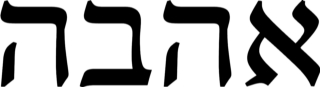
Ahebah (“love”). Aleph, Heh, Beth, Heh.
In Hebrew Gematria, the word for “love,” Ahebah, enumerates to 13.
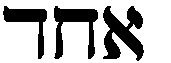
Achad (“Unity”). Aleph, Cheth, Daleth.
Whilst “Unity,” Achad, enumerates to 13 as well. Moreover the ineffable Tetragrammaton, Yod Heh Vav Heh, enumerates to 26 or 2*13, hence giving rise to a Qabalistic saying that “God = Love + Unity,” i.e. 26 = 13 + 13.
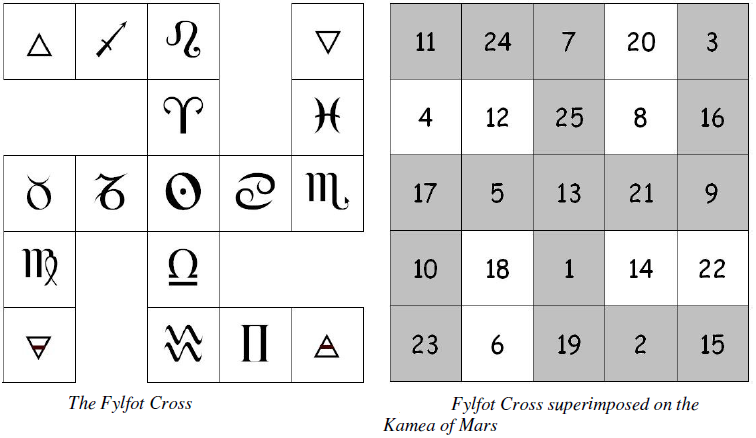
It gets more interesting when one analyses the symbolism of the Hermetic Order of the Golden Dawn. In the 1=10 grade of Zelator, the candidate is admitted (in the first part of the ceremony) with the admission badge of the Fylfot Cross, which is a clockwise swastika (i.e. the reverse of the Nazi symbol) comprising seventeen squares. The squares represent the 12 signs of the Zodiac, the four Elements, and the Sun; and they are arranged so that each of the four arms corresponds to one of the elemental triplicities, with the Sun in the very centre. The arms are (clockwise from top-left): fire, water, air, earth. Moreover each arm is arranged in the same order: the Cardinal sign of a given element is closest to the centre, followed by the Fixed (Kerubic) sign, then the Mutable sign, and finally the symbol of the Element itself at the extremity of the arm.
Now this seventeen-squared fylfot cross has in effect been cutout from a square of twenty-five individual squares – five by five – the same dimensions as the Kamea of Mars. So one day I thought to myself: what would happen if I superimposed the fylfot cross on this very Kamea? I immediately noticed the following: the number of each sign of the Zodiac, when added to that of the sign which opposes it, equals 26, 2*13, the number of the Tetragrammaton. E.g.:
| Number derived from Fylfot Cross / Kamea of Mars. | |
| Aries | 25 |
| Libra | 1 |
| Total | 26 |
Moreover the central square – corresponding to the Sun – is 13, the Number of Unity / Love.Therefore, the Neophyte enters the Zelator hall with the aid of a symbol which suggests that all dualities are ultimately to be resolved in the form of Yod Heh Vav Heh, thereby leading one to Unity.
 This is just one example: given the central importance of the Tetragrammaton to the Qabalah one should not be surprised that the number 13 may crop up throughout the Western Mystery Tradition, even where one would not expect it.
Filed under Supernatural
In which I impart some advice to a tweep who has just received a Tarot deck as a Christmas present. This video contains the outline of a practical ceremony you can perform for breaking in a new tarot deck.

The Tree of Life
“Tithing,” or the giving of a tenth-part of what you have to a holy cause, has a long tradition behind it. In the book of Genesis, Abram (Abraham) gave Melchizedek a tithe of everything he had. In both Judaism and Christianity it became a moral obligation to give to charity or in the latter case, to the medieval church, where it became an early form of income tax.
Nowadays, when I note that self-help books advocate “tithing,” not to the Church or any religious institution in particular, but to charity generally, the idea being that by “paying it forward” one may expect future material benefits.
Needless to say, all these people have got the wrong end of the stick – and not least because giving anything to charity in the hope of gaining a reward therefrom is not literally “Charity.”
Man is both a spiritual and a material being. Now Qabalists are always saying that the Bible is allegorical, and in the case of the Abraham / Melchizedek incident, the real allegorical meaning of saying “Abram gave him a tenth part of everything,” is that he gave him a tenth part of all he had both spiritually and materially – in other words, a whole Sephirah! So if one assumes that to be Malkuth, it effectively means that Abraham did not give 10% of his goods to Melchizedek but his entire life on the physical plane.
Therefore, anyone who gives just 10% of his or her income to charity is in fact only giving 1% of all they have – a tenth of a tenth part!
To be honest, I personally do not advocate literally giving away everything that one physically possesses. The real key is to recognise that Charity – Agaph – is not what you give but why you give it, i.e. an inward disposition of your own soul. In this sense, being prepared to put all of your life on the physical plane at the disposal of “Charity” becomes a realistic proposition.
Filed under Supernatural
Over at the the Wild Hunt I notice that the Grand Master of the Grand Lodge of Florida has decided that certain named types of pagans – including Wiccans and Odinists – cannot be Freemasons. Here is a scan of the edict:

Now, get this. As far as I understand Freemasonry, the authorities he has cited as part of his edict – the Landmarks, and the charge of a Freemason – are entirely correct. However he seems to have excluded a number of things from his consideration, to wit:
The Volume of the Sacred Law is not necessarily a specific book (e.g. the Bible), but that which constitutes the revelation from heaven which is binding on the conscience of the individual. Hence, it would be the Holy Book of the religion of the candidate being initiated – and indeed, non-Christians are allowed to swear their G.’. and S.’.O.’. on the Holy Book of their choice, e.g. the Tanakh, Koran, Zend Avesta, etc. It is my understanding of Freemasonry, therefore, that one may become a Mason so long as one believes in a God, who is the G.’.A.’.O.’.T’.’.U.’. from one’s own point of view, and one is prepared in all good conscience to swear on a Holy Book of one of the world’s religions.
Furthermore, the GM of Florida has managed to discriminate against pagans, without exercising discrimination! Whilst Agnosticism probably isn’t compatible with the craft, Gnosticism and Paganism are far too general terms to bandy about and there is a lack of explanation as to what is exactly wrong with Wiccan and Odinism. The thing is, religious and political discussions are banned within craft lodges anyway, so once they are in, they cease to be members of different religions and are simply Brothers of one Craft. It is within my personal knowledge that there are many pagans who are Freemasons, though not within Florida in the United States.
Now let me tell you a little story. In my novella, Shall We Kill The President?
“The bus-boycott was when, exactly?” Elijah said.
“You’re from out-of-state, right?” the driver said. “Just cause it’s fifty years gone don’t mean attitudes change much in these parts.”
“Tell me about it,” Elijah muttered.
“Like when I joined the Masons,” the driver continued. “Whenever I tried going to a Lodge in this state, immediately they go to ‘refreshment’ soon as I walk in the door. ‘So, Bros,’ I sez to ’em, ‘when we gone from refreshment to labour again? Ain’t you got a ritual today?’ But they just plain ignore me as if I ain’t there. I gets the message real quick, and take mysel’ down to Prince Hall sharpish, if you know what I’m sayin’.”
“Huh!” Elijah snorted. He paused, before adding: “So how do you join the Masons? The Prince Hall ones, I mean.”
“Oh, you just need to believe in God and that you’re goin’ to Heaven when you die,” the driver said. “Why? Does that sound like something which appeals to you?”
Elijah frowned. “No,” he said.
The fact of the matter is that although dressed as fiction, the experience described by the taxi-driver is a real-life phenomenon experienced by African-Americans who are either Masons or who want to become Masons in certain parts of America. I know this because it was related to me by an American Mason – in the state of Florida.
That’s right: the unpalatable truth is that pagans might feel aggrieved because they can’t become Masons in Lodges warranted by the Grand Lodge of Florida, but black Masons have been discriminated against in the same state for far longer than just November 2012. The problem is far more serious than pagans seem to realise.
Filed under Books, Rant, Shall We Kill The President?, Supernatural




 Sol Ascendans - The Website of Alex Sumner
Now available in Salem, Missouri!
News today that a Federal Judge has ordered the town library of Salem, Mo., to un-censor pagan and wiccan websites. This comes after a pagan lady attempted to use the public terminals to research death and death rituals in minority religions but was prevented from doing so, on the grounds that the Library’s filtering software had been set to prevent access to undesirable content. The Library staff refused to change the settings when the plaintiff complained to them.
The Judge however ruled that as a public body, the Library was obliged to abide by the First Amendment to the Constitution: the filtering employed by the Library discriminated against pagan religions, hence it was unconstitutional.
There is a happy side-effect to this! Apparently,
This must surely mean that now, the good people of Salem, Missouri have the opportunity to visit my website as well! In which case I would like to extend my heartiest of welcomes to everyone from Salem visiting my site for the first time. I hope you enjoy your stay here, and I assure you that my occult thrillers are quite reasonably priced. 😉
Leave a comment
Filed under Comment, Supernatural
Tagged as Censorship, paganism, Salem (MO), shameless plug